Intro: Inspired by both my Chinese classes, where I learned about the 4 historic novels of China, and my 7th graders, who are currently reading one of them, I started reading Journey to the West (Ming Dynasty) and I went to Pingyao Ancient City 平遥古城 for the weekend.
History of Ping Yao Pingyao is a historic Chinese city from the Ming and Qing Dynasty. It possesses multiple World Heritage locations, 22 museums, and maintains the historic city wall. Those museums are mostly historic buildings, such as old style banks, government administrative centers, Confucian temple/school complexes, Buddhist and Taoist temples, and then smaller museums which are also maintained (or rebuilt) parts of the historic city. While the city was important in the Ming Dynasty, most of the maintained and rebuilt aspects are actually from the Qing dynasty.
The Weekend
I had a fantastic time exploring the city. I booked a traditional style hotel inside the ancient city walls, and hopped on the high speed train, which took about 2 hours Saturday morning. Upon arriving I walked the many alleyways and down the main South street.
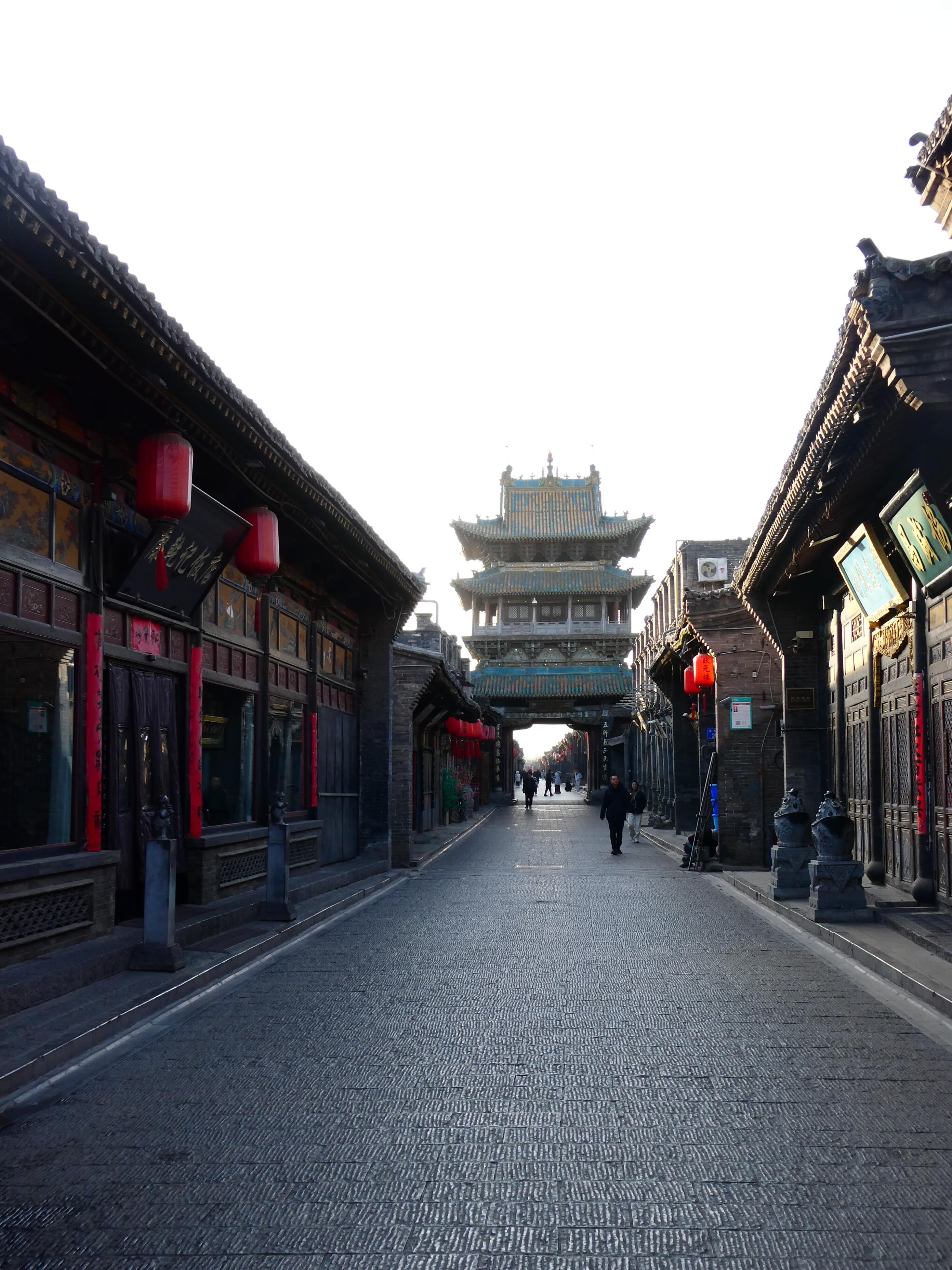 Photo from South Street
There are multiple gate/temple-like structures that span across the different streets, but South Street has the most prominent one. Lined with souvenir shops and restaurants, I stopped in and had a delicious lunch of spicy fried beef noodles and fried vegetable balls with a sweet and sour dipping sauce. Additionally, the region tends to do roasted peanuts as their "freebie pre appetizer snack" and I had some of those. Northern China, and Pingyao specifically, also are very into black vinegar, so the waitress offered to pour some on my peanuts. I said yes, willing to try it. (Should've said no.)
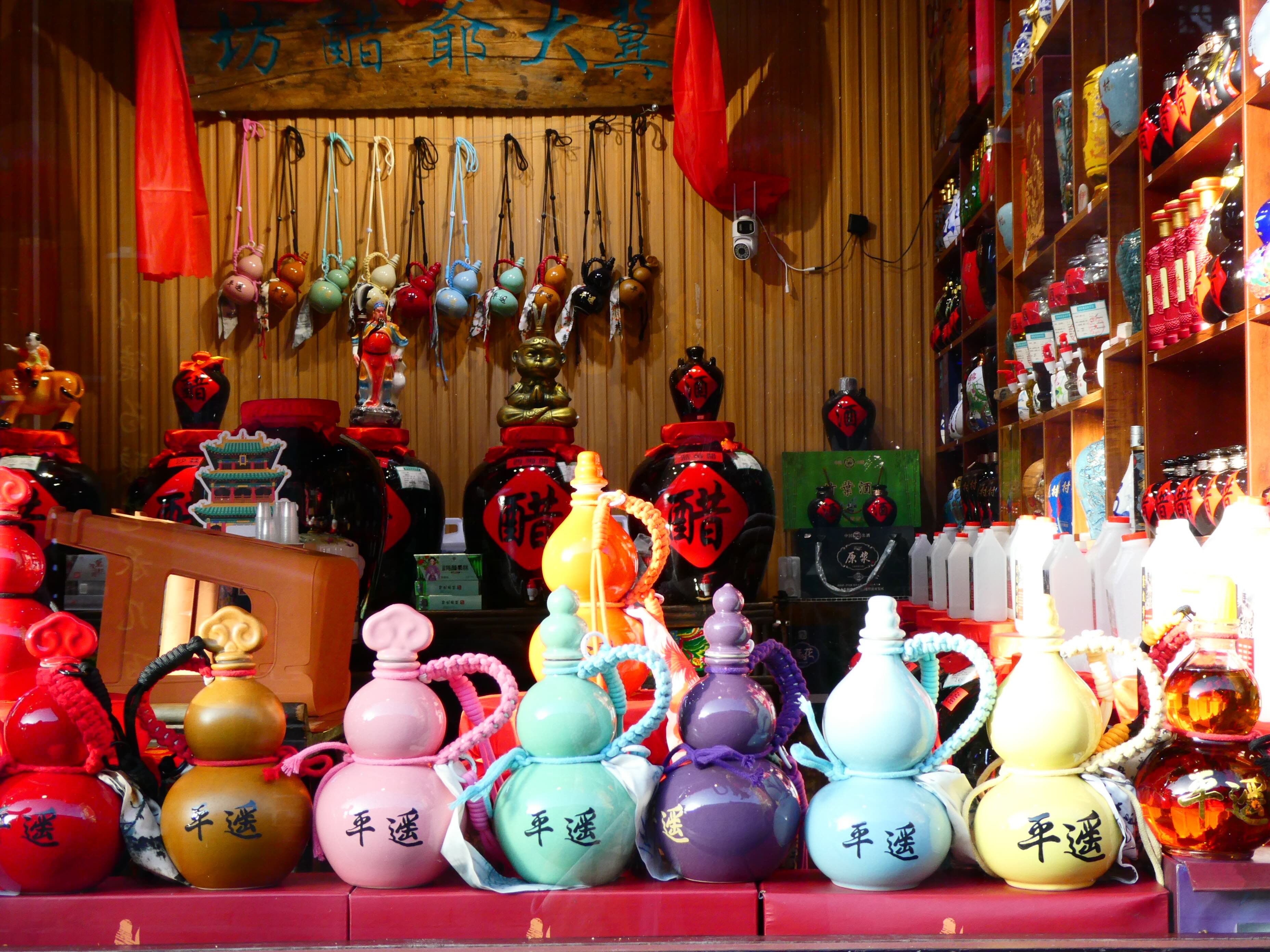 Colorful Vinegar Shop
After lunch, I went to the Government Offices and the RishengChang Bank. The government offices were cool, and I was particularly fascinated by the areas where magistrates and judges sit (as the child of an attorney who once took her to local courtrooms to showcase the different ways physical spaces are utilized to intimidate or to show preference to defense vs. prosecution.) Based upon my reading of the room (and my subsequent time exploring the jail cells and torture museums) punishment was the intention of the spaces. Speaking of, the torture instruments, much like medieval European ones from the same time period, were horrific and terrifying and I skipped most of those rooms.
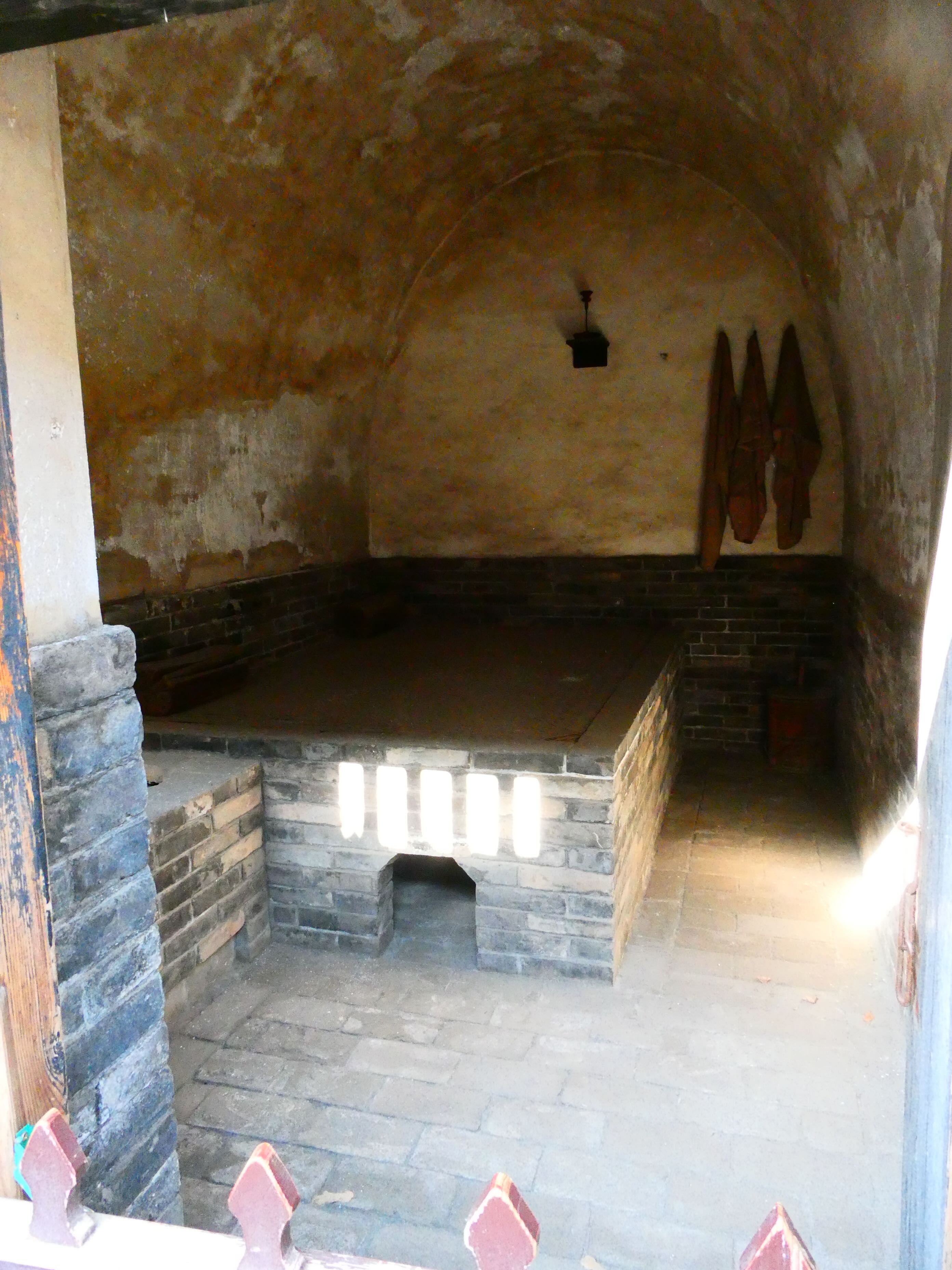 Basic Prison Cell for the least punished inmates
Then, I circumnavigated the City Walls, which took a couple hours. It was quite cold and windy when clouds covered the sun, but otherwise was an awesome time. The walls are extremely dangerous, as the outside edge is super high (keeps out invaders) and the inside edge came up to only my knee and sometimes only my ankle. The purpose was defense, and is currently not adjusted to prevent falling. (Minus the sign every 5 feet saying "watch out, don't sit, don't lean".) It was cool being able to see across the roofs of the city, and I could totally understand the ninja-style running on rooftops aspects of many movies set in similar locations. A parkour lover would have a blast, because most alleys and roofs are jump-able, but then you could do harder and harder challenges.
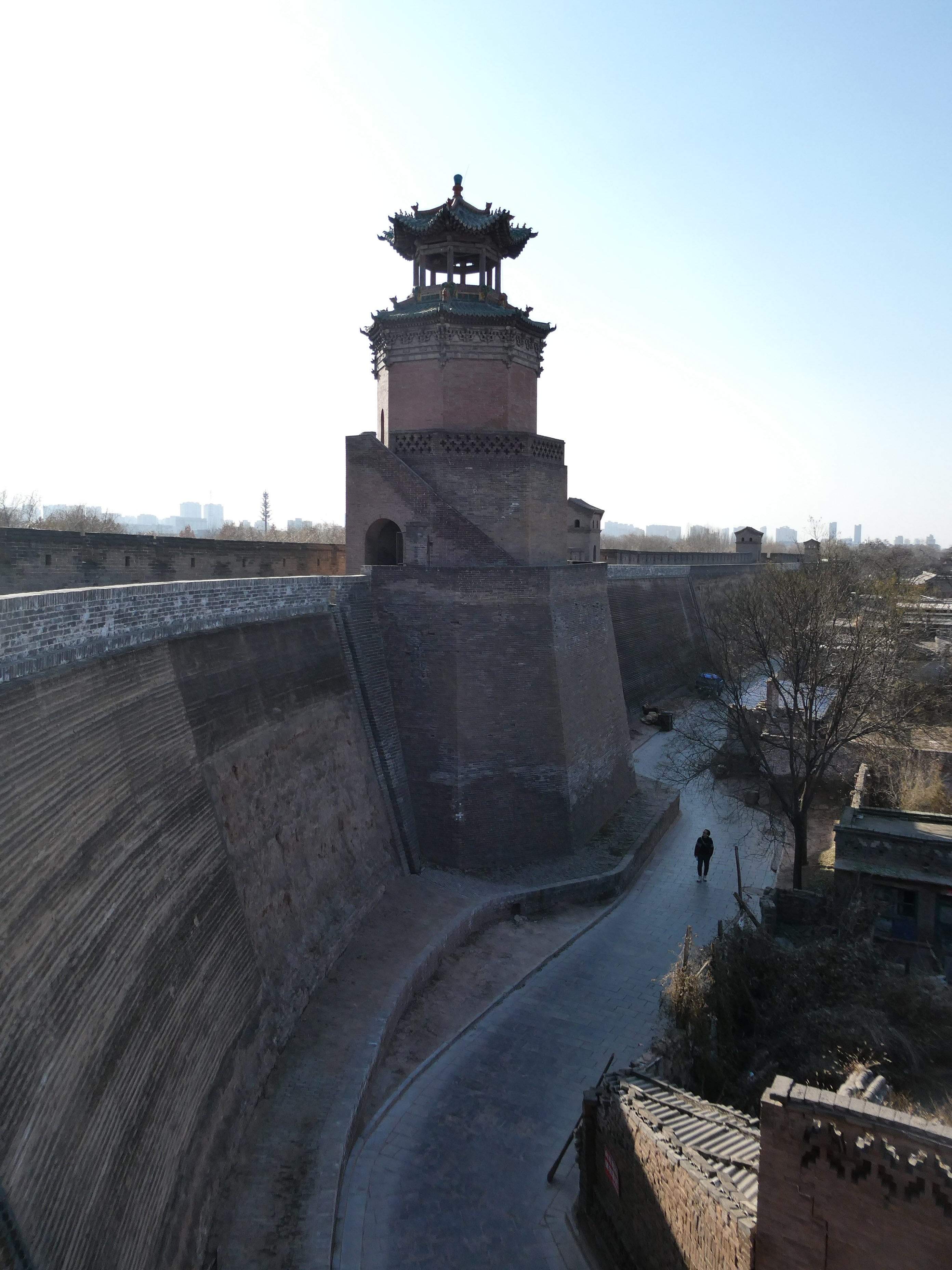 Tower On City Walls
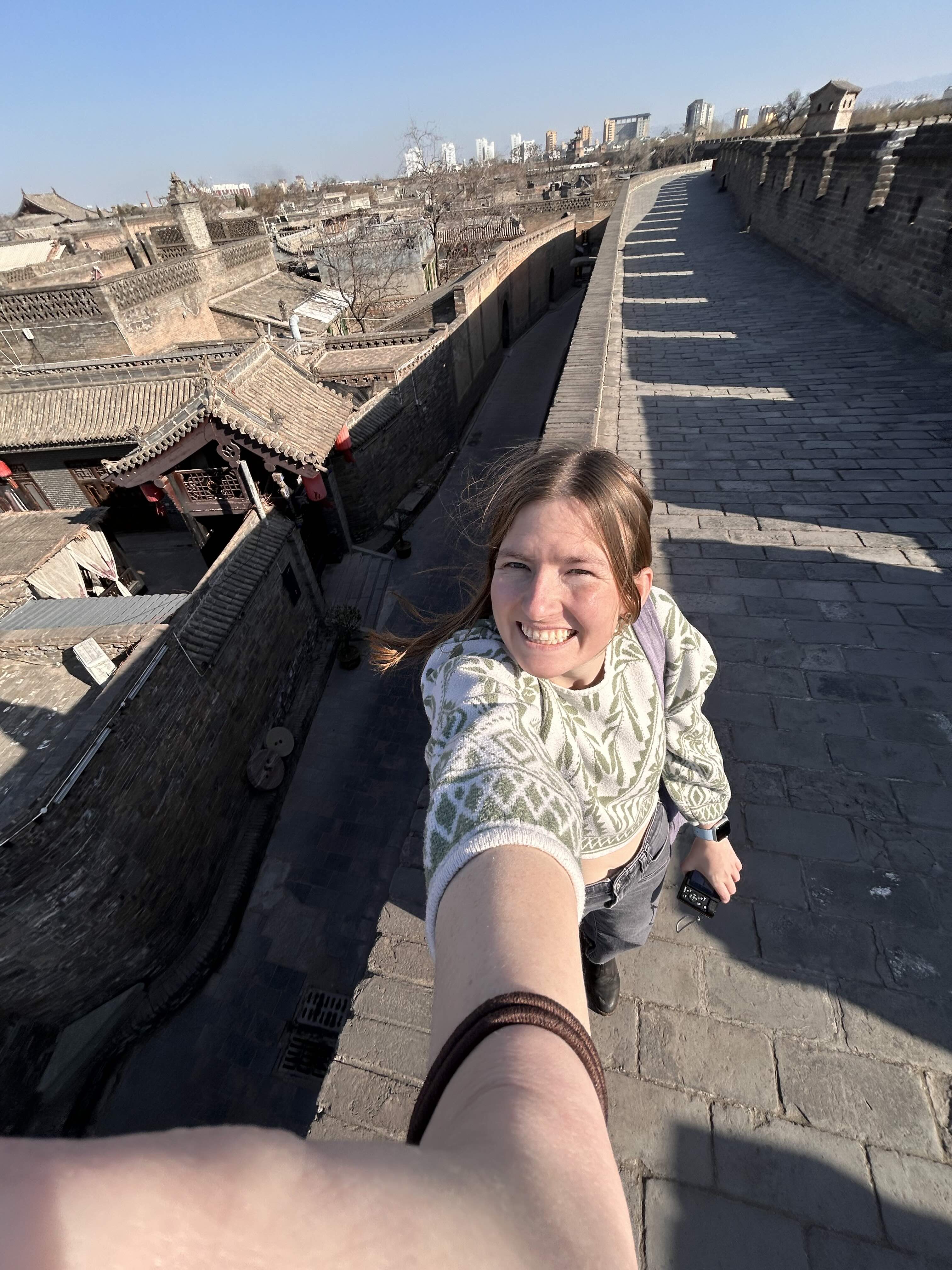 Selfie From City Walls
After walking the walls, I visited the temples and was particularly interested by the museum of Confucianism because I'd seen many Taoist and Buddhist locations in my time in Inner Mongolia. Also, as a teacher and as someone who spent 17 years of my life (so far) in school, I am really interested in educational philosophy.
That evening, I stopped again for dinner at a restaurant. (Chosen because the owner/host) yelled at me the most politely, and had some spicy beef and veggie stir-fry with a side of rice. Being yelled at and propositioned (for sales not like that get your mind out of the gutter) is pretty normal as you walk around tourist areas. Pingyao certainly is intended as a tourist destination, (celebrated and maintained by local and national government as a preservation of history) and I kind of liken it to Colonial Williamsburg. Luckily, a ticket for the city is 12 yuan and it gets you into every museum and access to the walls for 3 days, so definitely a steal. When getting encouraged to come buy from shops, as you walk past and are clearly not Chinese, the sellers normally yell "Hello!" followed by "English menu" or "vinegar" or "come in, look!" and it is honestly successful. As someone who speaks some Chinese but looks like they might not, this is also a great time to practice your Chinese (and get complemented as soon as you can say like 3 things lol.) And, since it is winter and not a holiday, the city was not particularly busy. This meant that I had the walls nearly all to myself, and that in each shop I went into I could spend a good amount of time chatting without feeling bad for taking that person's time up. In a few places, I was clearly meant to haggle but I hate haggling so I mostly did not, and honestly the price of goods (although inflated I'm sure for tourists) were still much cheaper than the price of any good in a tourist area in the States.
That was pretty much how I spent my evening; lights began to cover the streets and lanterns hung from walls. The shops stayed open, and I got a chocolate-filled fish shaped waffle for dessert. I wandered the different streets and alleys, and the child (now no longer child) who loves medieval fantasy in me really felt like I was in a scene from one of those books.
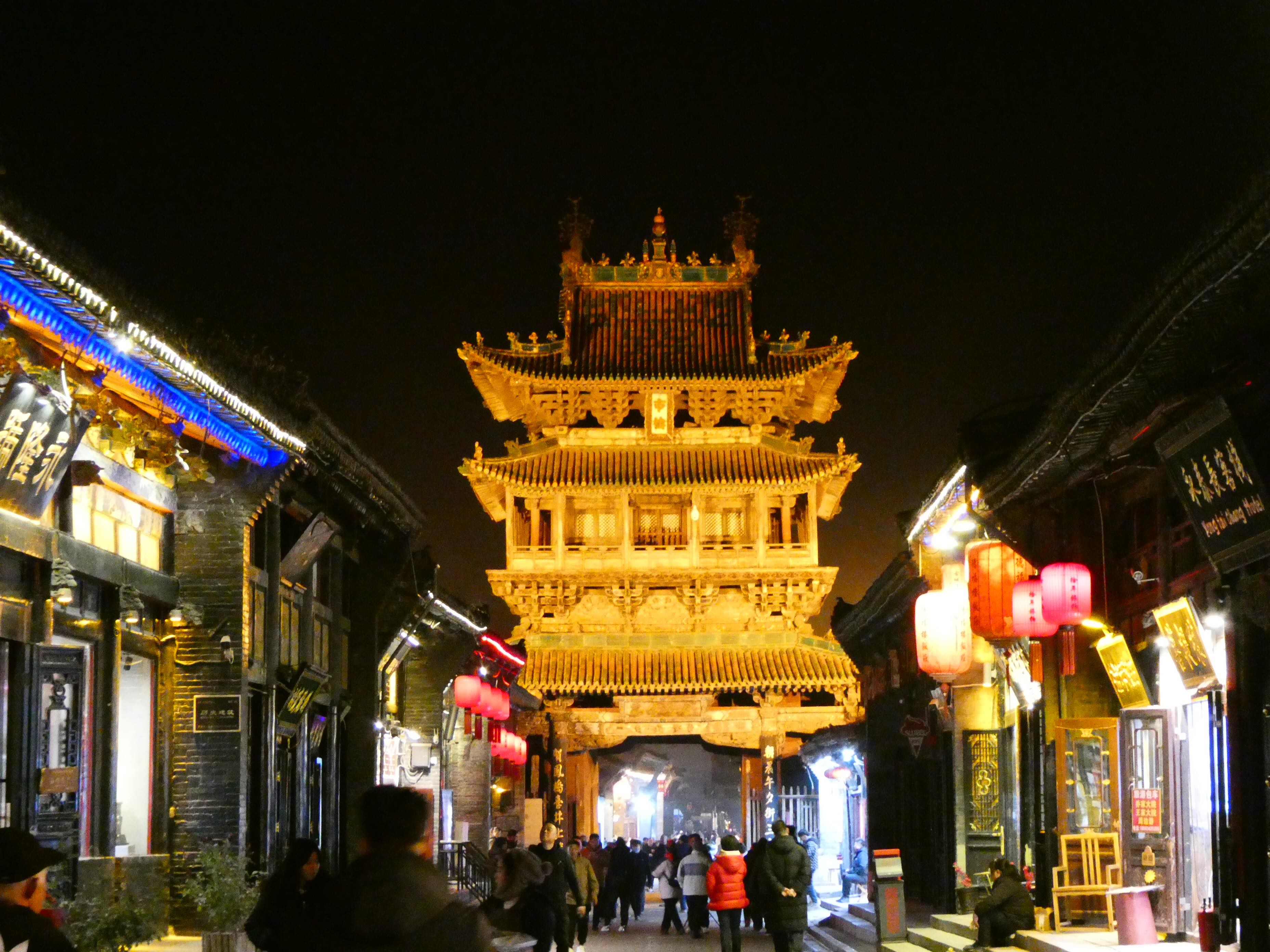 South Street at Night
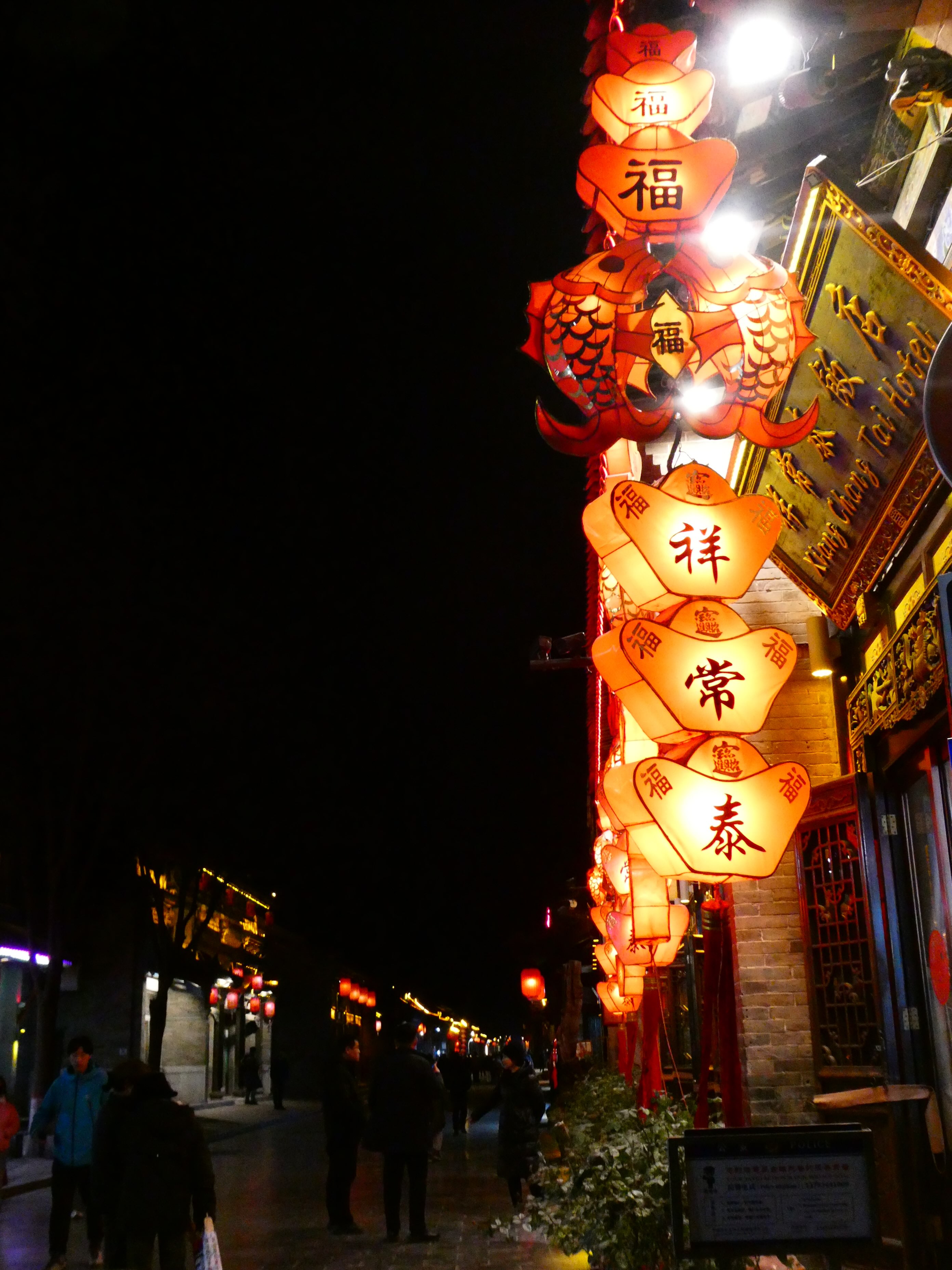 Night Shopping
The next morning, I had the city entirely to myself, as most shops didn't open until 9, 10, or even later, and I just wandered before hopping the train back home.
Journey to the West I am not finished, but I love Journey to the West already. As someone who wrote a masters thesis on Medieval Crusades Romances, this book gives me the same feeling. Published in the Ming Dynasty, it tells the story of a 7th century historical figure in Chinese Buddhism. Plot wise, it doesn't always make sense, because there are multiple sections and the main character isn't introduced until chapter 8, and there is magical fights, and elements of other pieces of Chinese folk stories clearly merged into the journey this man took. As such, it reads just like all my favorite medieval Crusade romances. They are an amalgamation of previous oral stories and historical figures, combined into a quest-narrative with the intention of sharing contemporary philosophy or religion. I think it's cool, and it is helping me situate some of the stuff I learned in college classes about Confucianism, Buddhism, and Taoism, because there is a combination (so far) of some of those philosophies in the book.