Intro I wrote this a week ago on my Uber back into the city from my day hiking in the mountains. It's more freeform and annoyingly introspective than normal, but after a week of giving children exams I feel like posting.
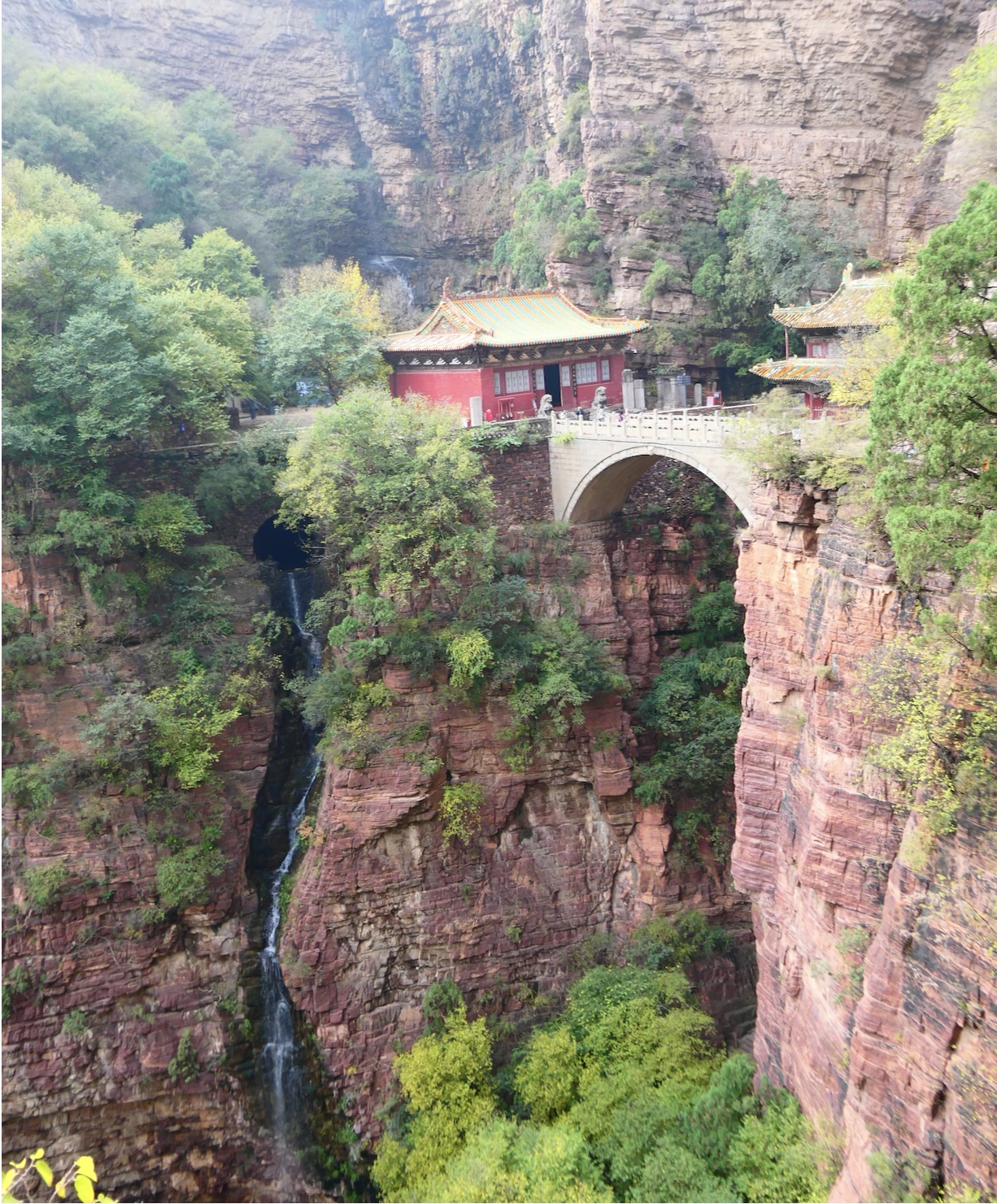
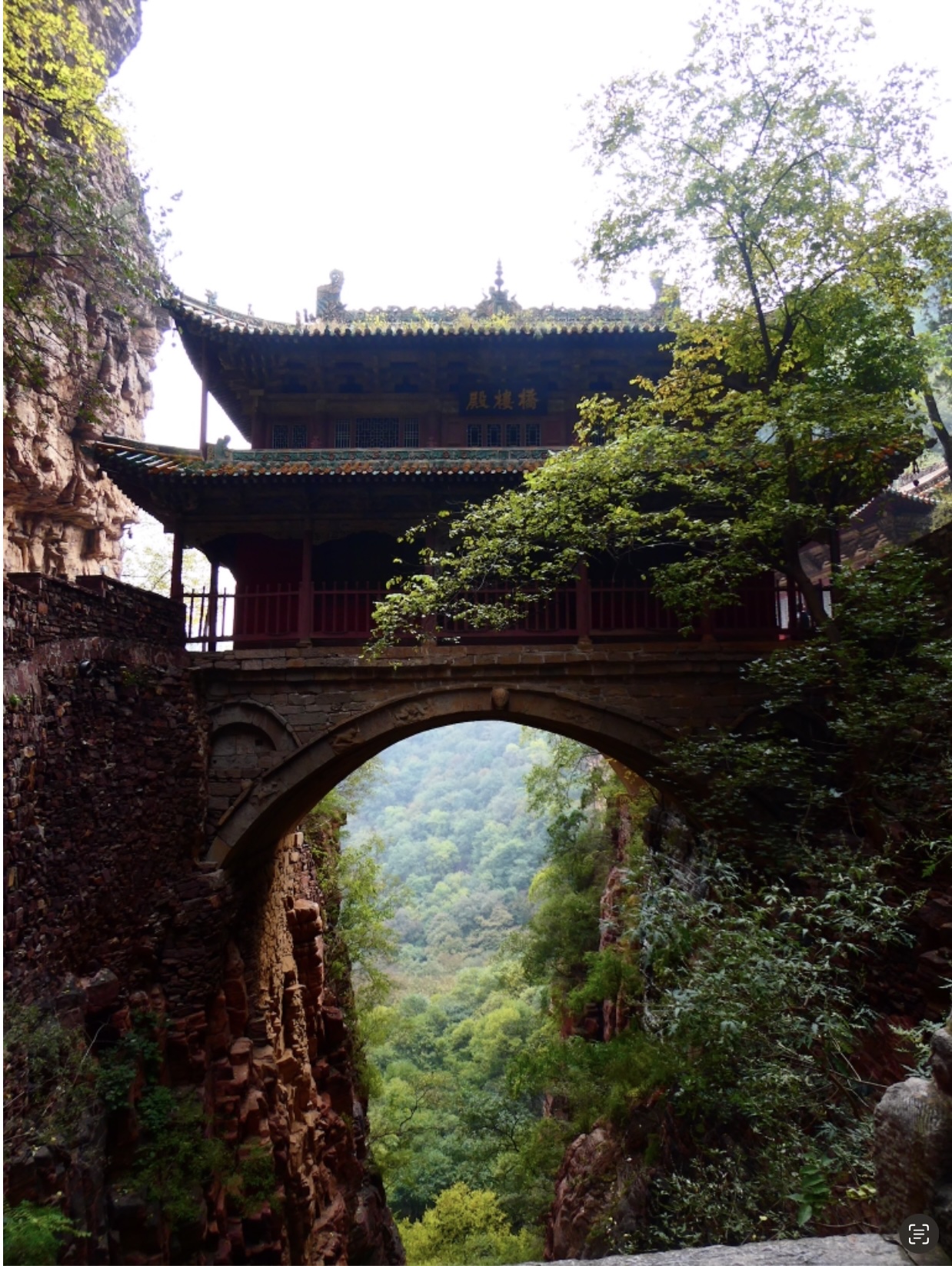
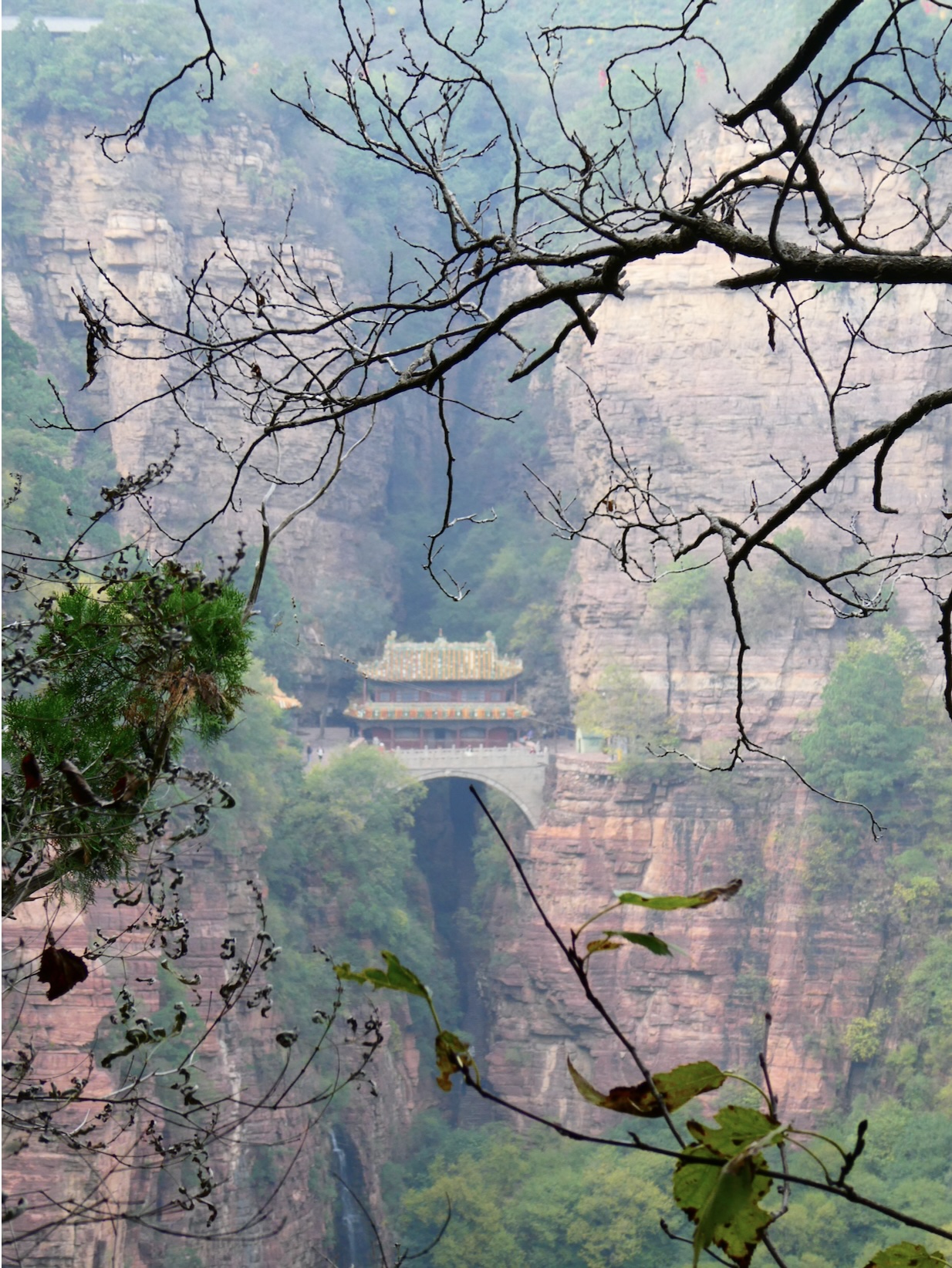
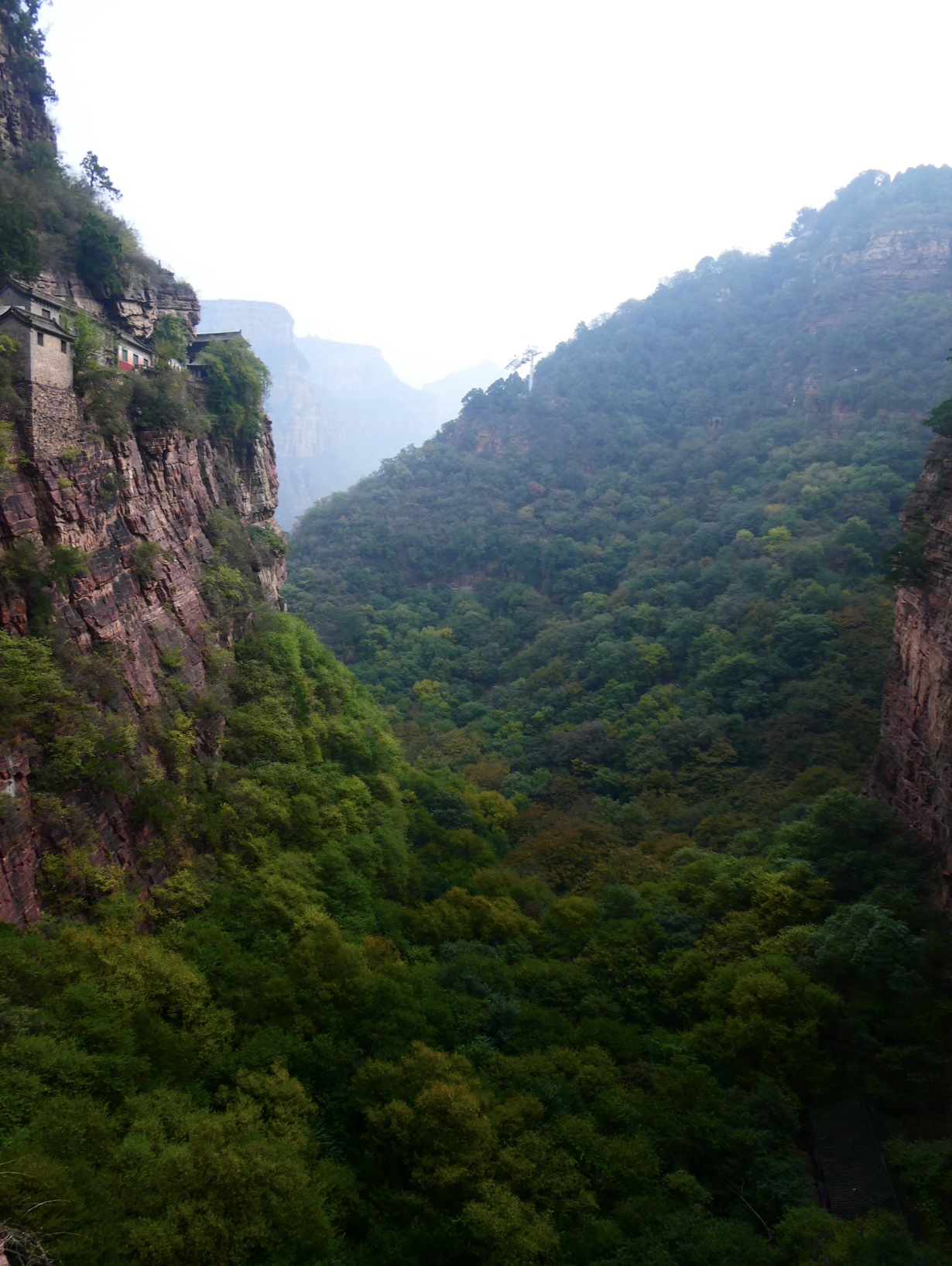
Cangyan Mountain Standing on the precipice of a cliff, overlooking a hanging temple built over 1500 years ago, I am bombarded with conflicting thoughts. Brought here by my memories of watching Crouching Tiger, Hidden Dragon in middle school Chinese classes, I am struck by the irony of these beautiful bridge-temples supposedly built by a princess fleeing war and the insanity of Sui Dynasty courtly life to become a Buddhist nun known now not for their religious significance, but because of their prominent role in blockbuster movies. The main bridge-temple is truly stunning. It hangs over a narrow gorge through which visitors climb to reach their destination, is situated next to a beautiful waterfall, and is located about midway up the actual scenic area of the mountains. The area is littered with many other temples, caves, holy structures, and natural scenery. And the visitors to the area are tourists like me, but many are also on religious journeys. They stopped at a nearby grocery store on their way to Cangyan and now carry bags and bags of fruit up the 66 flights of stairs we must climb, leaving offerings at the foot of the different shrines. Many stop and kneel to pray within each temple, making this area not a relic of Sui Dynasty religiosity but an active location of religious expression and thought. For myself, despite the fact that I am not Buddhist and have no intention of becoming so, and despite my own complicated relationship with faith, there is a weight to a holy place, even one not of my religion and culture. Amidst the cliffs, I climb through temples, and I end up in an underground room, alone with some statues of bodhisattvas, the wide room echoes with the ringing of bells from visitors above. Maybe the energy I feel in that space is simply the optical effect of a sound bath, good architectural design made to give any worshippers the sense of a deity through simple biological sensory input, or maybe it is the knowledge that for thousands of years, others made their way to these very tunnels, looking for peace or happiness, or like me, simply enjoying a lovely day in the mountains. In anthropology, we often talked about what made a space “sacred” and how the relationship individuals have to any space can be markedly different, and how over time different spaces become more and less sacred to individuals. In Cangyan mountain, you can see it. You can see the branches of sandalwood trees that have lived for millennia, and others that barely lasted decades, unable to successfully wrap their roots around the red rock walls of the mountains. You can see the ancient temples which have been maintained or restored, and which serve both as tourist trap and sacred space today. You can also see the piles of trash in areas where maintenance was less of a priority, and as the day goes on, I increasingly see less and less of the mountains themselves because the pollution from nearby cities begins to blank the area in smog. My thoughts turn to the smog and the trash. They turn to my own presence in this space and the relationship between earth and people that is represented in this singular mountain. The relationship can be symbiotic or it can be parasitic. The mountains are gorgeous, and the access to a gondola gives more people the opportunity to worship in the temples and explore the scenery than they would’ve been able to before, but it also certainly takes up space that once was left to the sandalwoods and cedars alone. There are sandalwood trees that have been specifically protected for millennia, nurtured by those who valued them, and there are those trees which are being choked by the very smog that has me coughing at the top of the mountain. I wonder, did a young Sui dynasty princess know, when she built a monument to her religious dedication as a rejection of worldly things, that that monument would become the very reason the world intruded into Cangyan mountain? Did she conceive of the possibility of a young girl from across the world making friends on her hike through the mountain, friends made because both parties alternated taking pictures of one another? What would she think of her mountain today? Would she love how many people are now able to access this space where she found refuge? Would she hate the way that for many of us, her refuge is not a sacred space but merely a day to enjoy the changing leaves of fall and take photos as a guest interested in the beauty but finding no religiosity within it?